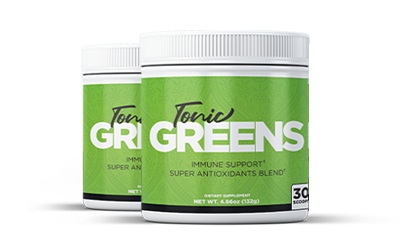
A once-daily greens powder built around six named ingredient groups — quercetin foods, a resveratrol berry blend, pure curcumin, extra antioxidants, a reishi-shiitake-maitake mushroom phytomix, and a prebiotic-probiotic layer — designed to cover daily immune support, digestion and antioxidant nutrition in a single scoop you stir into water, juice or a smoothie.
Most greens powders hide everything inside one proprietary blend: a long ingredient list, a single total weight, and no way to tell whether any one ingredient is present in a meaningful amount. TonicGreens does something genuinely different, and this page is built around it. Its label sorts all 57+ ingredients into six named groups — quercetin sources, a resveratrol blend, pure curcumin, extra antioxidants, an immune-system phytomix, and a prebiotic-probiotic blend — so you can evaluate the formula group by group instead of taking a single blend on faith. That is a real step up in transparency, and it is why this guide treats each group on its own merits, with the research behind it, rather than repeating the vendor's headline claims.
But the same label is silent where it matters most. No per-ingredient amount is published for any of the 57+ ingredients, and no total scoop weight is stated in the material reviewed for this guide — the tub itself is labelled 132 g with 30 servings, which works out to about 4.4 g per scoop, but how that 4.4 g is divided between six groups and 57 ingredients is not disclosed. That is the honest tension at the heart of this product: the most transparent ingredient list in the greens category, and the least transparent dosing. This page does not guess the amounts, and it does not pretend the research on quercetin or resveratrol proves anything about a scoop whose quercetin content is unknown. What it does is show you exactly what is in each group, what the science actually says about those ingredients, and what a daily scoop can reasonably be expected to do.
TonicGreens is a powdered superfood drink mix for daily immune and general wellness support. Each tub holds 132 g — 30 servings — and you mix one scoop into water, juice or a smoothie once a day. The six groups are: (1) quercetin sources — kale, asparagus, green bell pepper, broccoli, orange, acerola cherry and green tea leaf; (2) a resveratrol blend — concord grapes, blueberries, blackberries, raspberries and cranberries; (3) pure curcumin from turmeric root; (4) extra antioxidants — spirulina, parsley, organic banana, coconut juice, wheatgrass, apricot, Brussels sprouts, cabbage, tomato, cucumber and cinnamon bark; (5) an immune-system phytomix — reishi, shiitake and maitake mushrooms, spinach, Korean ginseng root, pineapple, cauliflower, camu camu, cherry, pomegranate and beetroot; and (6) a prebiotic and probiotic blend for digestion and nutrient absorption. The product is sold only through its official website — it is not stocked at Walmart, GNC or pharmacies — and orders are processed by BuyGoods, the retailer named on the official order page. Every package is a one-time payment with no subscription, and every order is covered by a 60-day money-back guarantee.
One thing to get straight before anything else: TonicGreens is a dietary supplement, not a medicine. It is not FDA-approved — no dietary supplement is — and it does not prevent infection, treat illness, or substitute for vaccination, sleep, or a decent diet. The vendor describes it as made in the United States in an FDA-registered, GMP-certified facility; that describes where it is made, not whether it works. No clinical trial has been run on the finished TonicGreens powder itself, so every benefit discussed on this page rests on the research behind the ingredient groups, not on a trial of this scoop. That is the standard this guide holds throughout: promise only what the evidence supports, and say plainly where the evidence stops.
TonicGreens is not a drug and it does not work like one. It works nutritionally, in five overlapping ways — each one tied to a specific group in the formula, and each one honest about what it can and cannot do.
Every day, normal metabolism, sunlight, pollution and stress generate free radicals — unstable molecules that wear on cells, including immune cells. The formula opens with three of the most-researched plant compounds in nutrition: quercetin, a flavonoid from kale, broccoli, green tea and acerola that helps support healthy inflammatory balance and antioxidant protection; resveratrol, the polyphenol from concord grapes and dark berries studied for cellular protection and healthy ageing; and curcumin, the active compound in turmeric root, widely studied for supporting a healthy inflammatory response. These three are the formula's headline act for a reason — their research literatures are genuinely deep — but the honest caveat applies from the start: the studies used measured doses of the isolated compounds, and this label publishes no amount for any of them. The antioxidant cover here is real in kind and unproven in dose, and this page says so rather than borrowing the trials' authority for the scoop.
The second layer is the immune-system phytomix, built on reishi, shiitake and maitake — the three most-studied culinary-medicinal mushrooms — alongside spinach, Korean ginseng root, pineapple, cauliflower, camu camu, cherry, pomegranate and beetroot. Mushrooms are the interesting part: their cell walls contain beta-glucans, long chains of sugars that immune cells recognise, and beta-glucans are one of the few food components with a real, studied relationship to immune function. Reishi, shiitake and maitake have each been studied for immune-relevant effects, and ginseng adds a long traditional record of supporting resilience under stress. None of this makes a scoop a shield against infection — it does not — but it is the most defensible immune layer in the formula, and the one most greens powders skip entirely. Camu camu and cherry add natural vitamin C to the same group, which supports the normal function of immune cells in a way that is straightforward and well established.
The third layer is the plainest and, for most buyers, the most useful: actual greens and fruits. Spirulina, parsley, wheatgrass, Brussels sprouts, cabbage, tomato, cucumber, organic banana and coconut juice supply the vitamins, minerals and plant pigments that a diet light on vegetables misses — folate, vitamin K, magnesium, potassium and a spread of carotenoids — in food form rather than as isolated synthetics. Nobody needs a study to know that most adults eat far fewer greens than they should; the honest claim for this layer is not that it does something exotic, but that it closes a daily gap. A scoop will not replace a salad, and this page does not claim it will — but for a person whose vegetables arrive mostly as a garnish, a daily scoop of real greens and fruits is a genuine nutritional step up, and it is the layer most likely to be felt as steadier day-to-day wellbeing rather than as any single dramatic effect.
The fourth layer is the one that separates TonicGreens from most greens powders: a prebiotic and probiotic blend. Prebiotics are the fibres that feed beneficial gut bacteria; probiotics are the live cultures themselves. Together they are meant to support digestion and nutrient absorption — which matters twice over here, because a formula is only as good as what your body absorbs from it, and because roughly seventy percent of the immune system lives in and around the gut. This is also where the page must be most careful: the material reviewed for this guide names the prebiotic-probiotic blend as a group but does not name the specific strains or their amounts, and without strains and amounts there is no way to compare this blend with a dedicated probiotic. Treat it as a sensible supporting layer, not as a probiotic product in its own right — and if you already take a probiotic with named strains, this scoop duplicates the idea rather than replacing it.
The fifth way TonicGreens works has nothing to do with any single ingredient: it works by being easy enough to do every day. One scoop, stirred into water or a smoothie, takes less than a minute, and the nutrients it supplies — antioxidants, greens, mushrooms, gut support — build their effect over weeks of consistent intake, not from a single serving. That is why the formula is sold in 2-, 3- and 6-tub packages and backed by a 60-day guarantee rather than a 30-day one: the vendor's own structure assumes you will need at least two months to judge it fairly. The realistic expectation is not a sudden change but a slow one — steadier energy without caffeine, fewer of the small daily gaps that leave you run down, and a routine that makes eating well feel automatic rather than aspirational. If you stop after a week, you have tested nothing; the fair test is the full 60 days the guarantee allows.
One scoop a day covering the main ways daily nutrition falls short — from immune readiness to gut balance and steady energy.
The headline benefit, and the one the whole formula is organised around. Quercetin, resveratrol and curcumin support healthy immune signalling; the reishi-shiitake-maitake phytomix contributes beta-glucans that immune cells recognise; camu camu and cherry add natural vitamin C, which supports the normal function of immune cells. None of this prevents colds or flu, and this page will not pretend otherwise — what daily immune support actually means is giving the immune system the nutrients it uses every day, so it is not running on empty when a seasonal bug comes around. If you catch every cold that goes through the office, the honest question is whether your daily nutrition is covering the basics, and a scoop like this is designed to close that gap rather than to act as a shield.
Free radicals are a normal by-product of living — breathing, exercising, sunlight, city air — but when antioxidant intake is low, the wear accumulates. TonicGreens layers its antioxidants instead of relying on one: quercetin and green tea from the first group, resveratrol and berry polyphenols from the second, curcumin from the third, and spirulina, wheatgrass and tomato from the fourth. Each works in a slightly different way and in different parts of the body, which is the point of a food-based blend over a single high-dose vitamin. The protection here is general and cumulative, not targeted at any one organ, and it is best understood as daily maintenance for cells that are under constant low-grade oxidative pressure — the kind that comes with modern life rather than with any single disease.
The prebiotic-probiotic blend is the formula's quiet differentiator. Prebiotics feed the beneficial bacteria already living in your gut; probiotics add live cultures to the mix. Together they are designed to support smoother digestion, less bloating after meals, and better absorption of the nutrients in the scoop itself — and, through the gut-immune connection, to support the immune system where most of it actually lives. The honest limit is that the blend's strains and amounts are not published, so this page cannot compare it with a dedicated probiotic or promise a specific digestive result. What it can say is that a greens powder with a gut layer is doing something most greens powders do not do at all, and that for people whose digestion feels sluggish, that layer is a legitimate reason to prefer this formula over a plainer one.
There is no caffeine and no stimulant in this formula, and that is a feature rather than a gap. The energy TonicGreens aims at is the absence of the afternoon dip, not a buzz: B-vitamin-rich greens, iron-supporting spinach and beetroot, and the steady nutrient supply that keeps blood sugar from swinging the way a skipped breakfast or a sugary snack makes it swing. Green tea leaf is in the quercetin group, so a trace of naturally occurring caffeine is possible — but the formula is not a stimulant product, there is no crash to manage afterwards, and you can take the scoop at any time of day, including the evening, without worrying about sleep. If your energy problem is a 3 p.m. wall, the realistic expectation is a slow flattening of that wall over weeks, not a jolt on day one.
Low-grade, chronic inflammation is the background condition behind much of modern ill health — not the sharp inflammation of an injury, but the slow, silent kind driven by poor diet, stress, poor sleep and excess weight. Curcumin is the most-studied natural compound for supporting a healthy inflammatory response, and quercetin and resveratrol are studied in the same direction; together they are the reason this formula reads as much as an inflammation product as an immune one. The caveat is the same as everywhere on this page: the studies used measured doses, and this label publishes none. So the fair statement is that the formula contains the right ingredients for this purpose in the right combination, and that anyone expecting a measurable anti-inflammatory effect should judge it over the full 60 days — and should also know that no powder replaces the bigger levers: sleep, movement, and cutting back on the foods that drive inflammation in the first place.
Resveratrol earned its fame from the "French paradox" — the observation that diets rich in red grapes and red wine seemed to go with healthier hearts — and it has since been studied for cellular protection, healthy blood flow and healthy ageing. The berries in the resveratrol blend add their own polyphenols, and beetroot in the phytomix contributes dietary nitrates that the body converts to nitric oxide, which supports healthy circulation. None of this is a heart treatment, and this page does not present it as one; the honest framing is that the same polyphenols that support immune cells also support the blood vessels and cells that age with us. For buyers in their forties, fifties and beyond, that long-view benefit — daily polyphenol intake as part of a healthy-ageing routine — is a more sensible reason to take this scoop than any short-term promise.
Step back from the individual claims and the simplest benefit is the one most people actually buy: a daily scoop that covers the nutritional bases a normal diet misses. Leafy greens, berries, mushrooms, turmeric, green tea, spirulina — the foods nutritionists keep recommending and busy people keep skipping — in one scoop, every morning, without shopping, chopping or juicing. It does not replace vegetables, and anyone who tells you a powder replaces a salad is selling you something; but as a floor under a mediocre diet, it is genuinely useful. The 57 ingredients are the point here, not any single one of them: breadth is the benefit, and the six-group label lets you see that breadth instead of taking it on trust.
The least glamorous benefit is the one that decides whether a supplement works at all: whether you actually take it. TonicGreens asks for one scoop, once a day, stirred into whatever you already drink — water, juice or a smoothie — with no pills to swallow, no timing rules, no refrigeration and no complicated routine. That matters more than it sounds: the best-researched formula in the world does nothing sitting unopened in a cupboard, and the products people stick with are the ones that fit into a morning they already have. A tub lasts 30 days, the packages run to 180 days, and the guarantee runs to 60 — the whole structure is built around making the habit easy to keep, because the habit, repeated daily, is where any benefit this formula has actually lives.
Every ingredient is named and sorted into a group. What is not published is any per-ingredient amount — the cards below say so plainly for each group, because a dose you cannot see is a dose you cannot judge.
Kale, asparagus, green bell pepper, broccoli, orange, acerola cherry and green tea leaf. Quercetin is a flavonoid — the pigment that makes onions purple and apples red — and one of the most-researched plant compounds for antioxidant protection and healthy immune signalling. Acerola cherry is one of the richest natural sources of vitamin C. Green tea leaf adds catechins, including EGCG, and a trace of naturally occurring caffeine. The research on quercetin is real and deep; the amount in this scoop is not published, and this page does not borrow the trials' doses for the powder.
Concord grapes, blueberries, blackberries, raspberries and cranberries. Resveratrol is the polyphenol behind the red-grape story — studied for cellular protection, healthy blood flow and healthy ageing — and the dark berries around it add anthocyanins, the same pigments that make blueberries blue and that are studied for brain and eye health. Cranberries add their own record in urinary-tract health. As a group this is the formula's most elegant layer: five fruits, one shared polyphenol family, and a research base that is genuinely broad — with the same honest limit as every other group, which is that no amount is stated.
Turmeric root, the sole member of its group — and the only ingredient the formula gives a group of its own, which tells you how central the vendor considers it. Curcumin is the active compound in turmeric and one of the most-studied natural substances in medicine, with thousands of papers on antioxidant activity and healthy inflammatory response. The catch, well known in the research, is absorption: curcumin on its own is poorly absorbed, and the studies that show effects usually pair it with piperine from black pepper or with fats. This formula contains neither a piperine source nor any stated bioavailability support in the material reviewed, and no curcumin amount is published — two facts this page states plainly rather than smoothing over.
Spirulina, parsley, organic banana, coconut juice, wheatgrass, apricot, Brussels sprouts, cabbage, tomato, cucumber and cinnamon bark. This is the broadest group — eleven ingredients that read like a farmers' market stall — and its job is breadth: spirulina for dense micronutrients and phycocyanin, wheatgrass and parsley for chlorophyll and vitamin K, tomato for lycopene, cinnamon bark for its own antioxidant record, banana and coconut juice for potassium and palatability. No single ingredient here carries the formula; together they make the scoop a genuinely wide-spectrum antioxidant food. Amounts, as throughout, are not published.
Reishi, shiitake and maitake mushrooms, spinach, Korean ginseng root, pineapple, cauliflower, camu camu, cherry, pomegranate and beetroot. The mushroom trio is the heart of this group: their beta-glucans are recognised by immune cells, and reishi in particular has centuries of traditional use behind it as a resilience tonic. Korean ginseng adds adaptogenic tradition — support under stress rather than stimulation. Camu camu is among the richest natural vitamin C sources known; pomegranate and cherry add polyphenols; beetroot contributes nitrates for healthy circulation. This is the group most greens powders do not have at all, and the strongest single reason this formula is organised around immunity rather than generic "greens".
A prebiotic and probiotic blend closes the formula out, aimed at digestion and nutrient absorption. Prebiotics are fibres that feed beneficial gut bacteria; probiotics are live cultures that join them. The idea is sound — a healthier gut absorbs more of everything else in the scoop, and the gut is where most of the immune system lives — but this is also the group's weakest point on paper: the material reviewed for this guide does not name the probiotic strains, their amounts, or the prebiotic fibres used. Without strains, this page cannot compare the blend with a dedicated probiotic, and buyers who already take a named-strain probiotic should treat this group as a supporting layer, not a replacement.
The complete ingredient list, exactly as the label groups it: Quercetin sources — kale, asparagus, green bell pepper, broccoli, orange, acerola cherry, green tea leaf. Resveratrol blend — concord grapes, blueberries, blackberries, raspberries, cranberries. Pure curcumin — turmeric root. Extra antioxidants — spirulina, parsley, organic banana, coconut juice, wheatgrass, apricot, Brussels sprouts, cabbage, tomato, cucumber, cinnamon bark. Immune-system phytomix — reishi, shiitake, maitake, spinach, Korean ginseng root, pineapple, cauliflower, camu camu, cherry, pomegranate, beetroot. Prebiotic & probiotic blend — strains and fibres not named in the material reviewed. One scoop a day, 30 servings per 132 g tub. No clinical trial has been run on the finished TonicGreens powder itself, and no individual amount is given for any ingredient — that is stated here rather than guessed at, because a guide that invents doses is worse than a label that omits them.
TonicGreens was designed for adults whose daily nutrition has gaps they can feel — and who would rather close them with one scoop than with five different bottles. You may recognise yourself in one of these groups:
Your vegetables arrive mostly as a garnish, your fruit intake is a banana if you remember, and mushrooms appear on a menu, not on your plate. A daily scoop of 57 plant ingredients is the simplest way to close that gap — not a replacement for real food, but a floor under a diet that is honest about its own limits.
Every seasonal bug finds you, and every office cold becomes your cold. Daily immune nutrition — quercetin, mushrooms, vitamin C from camu camu — is designed for exactly this pattern, giving the immune system its daily supplies rather than waiting for the week you are already ill.
Long days, skipped breakfasts, coffee instead of lunch, and an afternoon wall at 3 p.m. A one-minute morning scoop that needs no cooking and no pills fits a schedule that has no room for a juicer — and the steady, caffeine-free energy is aimed at the wall, not at a buzz.
In your fifties, sixties and beyond, the question shifts from quick fixes to daily maintenance: polyphenols for healthy ageing, greens for micronutrients, gut support for absorption. A 6-in-1 scoop is a low-effort way to keep that maintenance going, backed by a 60-day guarantee that gives you time to judge it.
An honest boundary: TonicGreens is a nutritional supplement, not a treatment. If you are pregnant or nursing, take prescription medication — especially blood thinners or diabetes medication, which turmeric and green tea can interact with — or have a medical condition, speak with your doctor before using it. Never let any supplement replace medical care, vaccination, sleep, or a diet with real vegetables in it — and never judge a powder by its first week.
Nutritional support works on the body's timetable, not a stopwatch. Individual experiences vary — this is a realistic map of the first six months, the full length of the largest package.
The first fortnight is about building the habit: one scoop, every morning, in whatever you already drink. Your digestion is the first thing likely to notice anything — the prebiotic-probiotic layer and the fibre from 57 plant ingredients can mean a few days of adjustment, especially if your diet has been low in fibre. Start with a full glass of water or a smoothie rather than on an empty stomach if you are sensitive. Don't expect dramatic changes yet — this is groundwork, not the finish line.
By the end of the first tub, the scoop is automatic — and that is the point. Antioxidant and micronutrient intake has had a month of steady supply. Some people say the afternoon dip feels flatter by now; others notice their digestion feels more regular. Both are plausible, neither is guaranteed, and the honest test is not how you feel on day 30 but whether the habit is easy enough to keep for the next five months.
This is typically the window where people begin forming first impressions — steadier energy through the afternoon, fewer of the small run-down feelings that used to arrive with a busy week. It is also the end of the guarantee, so this is the honest decision point: if nothing has changed after two months of daily use, that is useful information, not a failure of willpower, and the guarantee exists for exactly that outcome.
Ninety days is the fair test most nutrition routines ask for — and the reason the 3-tub package exists. Compare like with like: how many seasonal bugs you caught this quarter versus last, how your energy held up through long weeks, how your digestion behaved. If the scoop feels like it is earning its place, you have your answer; if not, you have already passed the guarantee window, so the judgement you make now is the one that counts.
With the habit established, the focus shifts to maintenance — the daily polyphenol, greens and gut support that compounds quietly rather than announcing itself. Pair the routine with the habits that multiply its value: real vegetables on the plate, regular sleep, movement most days, and the basics of immune health that no powder replaces. The scoop is a floor, not a ceiling.
Six months in, you have the full picture: a winter season, several busy stretches, and a daily habit you either kept or did not. If you kept it and feel the difference — steadier energy, fewer sick days, better digestion — the 6-tub package has paid for itself at $49 a tub. If you did not keep it, the product was not the problem; the routine was. Either way, decide on the evidence of your own six months, not on a sales page.
Three honest ways to cover the same ground — and what each one actually costs you in money, effort and certainty.
What you get: 57+ named ingredients in six groups — quercetin foods, resveratrol berries, curcumin, extra antioxidants, a mushroom phytomix and a prebiotic-probiotic blend — in one daily scoop, from $49 a tub on the 6-tub package, with a 60-day guarantee.
Best for: people who want breadth in one habit, and who value a named ingredient list over a proprietary blend. The mushroom phytomix and the gut layer are things most alternatives do not offer at all.
Honest limit: no per-ingredient amounts are published, so the dose of any single ingredient is unknown; the curcumin has no stated absorption support; and the probiotic strains are unnamed.
What you get: a quercetin capsule, a resveratrol capsule, a curcumin capsule with piperine, a mushroom blend and a named-strain probiotic — each with a stated dose, which is the one thing TonicGreens does not give you. That certainty is the real advantage.
Best for: people who want to know exactly how much of each compound they take, and who are willing to swallow five capsules and pay five prices to get it.
Honest limit: five products cost far more than $49 a month, five bottles are five habits to keep, and you lose the greens-and-fruits layer entirely — no separate capsule gives you kale, spirulina and 57 whole foods in one scoop.
What you get: a cheaper scoop of greens — usually wheatgrass, spirulina and a few fruits — often at $30–40 a tub, with a single proprietary blend and a shorter ingredient list.
Best for: people who only want basic greens coverage and do not care about immune-specific ingredients or a gut layer.
Honest limit: no mushroom phytomix, no prebiotic-probiotic blend, no resveratrol or curcumin groups, and usually the same dosing opacity — you save money and get materially less, with no guarantee as long as 60 days.
What you get: the real thing — kale, broccoli, berries, mushrooms, turmeric in cooking, fermented foods for the gut — with doses you can see on your plate and fibre no powder can match.
Best for: everyone, in principle. Food is the gold standard, and no supplement beats a diet rich in the same ingredients.
Honest limit: it takes shopping, cooking and time that many people do not have, and some of these ingredients — reishi, maitake, camu camu, acerola — are not foods most people can buy or cook with at all. The scoop exists for the gap between what you should eat and what you actually eat.
Order through the official checkout to qualify for the guarantee and bonuses. Every package is covered for 60 days. Prices below are the live prices on the official order page as of November 2026.
⚠ High demand — this discounted pricing is not guaranteed to last.
A note on the savings figures you may see elsewhere: the official order page shows "Save $40" on the 2-tub pack, "Save $320" on the 3-tub pack and "Save $434" on the 6-tub pack — but the bottle-only arithmetic is $40, $120 and $300 against the $99-per-tub regular price, and the rest of the vendor's figure is the stated value of the two free bonus books. This page shows the bottle-only savings, because books are not tubs. (1) Shipping on the 3-tub package: the official video presentation shows a small shipping fee on the 2- and 3-tub packages, while several official mirror pages list free shipping on the 3-tub pack — confirm the final shipping charge at checkout. (2) The regular price is $99 per tub on every package; the discounted per-tub prices are $79, $59 and $49. (3) All packages are one-time payments with no subscription — confirm the final price at checkout before ordering, and note that a checkout upsell may be offered after your order — it is optional.
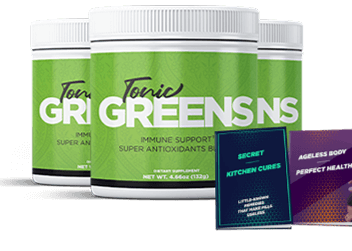
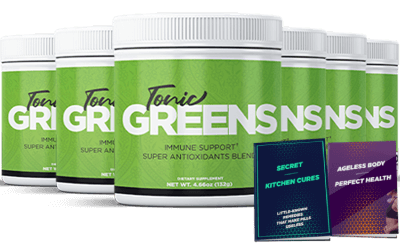
The first of the two free eBooks that come with the 3- and 6-tub packages — a guide to everyday kitchen remedies, the kind of food-as-medicine knowledge that fits naturally alongside a greens powder. FREE with 3 or 6 tubs
The second free eBook — a healthy-ageing guide that pairs with the formula's own long-view pitch: daily polyphenols, greens and gut support as part of staying well as the years pass. FREE with 3 or 6 tubs
Both bonuses are digital eBooks and they come only with the 3- and 6-tub packages — the 2-tub starter pack does not include them. One honest flag: the vendor publishes no page counts, no contents lists and no values for these books, so this page does not invent any — the covers are the vendor's own artwork, shown on the official order page. The vendor's "Save $320" and "Save $434" figures include the books' stated value; the bottle-only savings are $120 and $300, as shown in the pricing section above.
Try TonicGreens for a full 60 days. If you are not completely satisfied with your results — for any reason — simply contact the support team and you will receive a full refund.
Here is exactly what the official guarantee promises, from the official video presentation. Your 60 days start on the day you place your order, and the guarantee covers every package — 2, 3 or 6 tubs. If you are unsatisfied for any reason, contact the support team through the official website and request your refund. Two things this page does not invent: the official pages do not publish a return mailing address or a support email address in the material reviewed for this guide, so ask the support team for the return address when you write to them — and do not send anything back before they confirm it. And the guarantee is 60 days: no official page reviewed for this guide promises anything longer, and the 60-day window is the fair test this page recommends — judge the product over those 60 days, and keep a simple note of energy, digestion and sick days rather than relying on a general feeling.
TRY TonicGreens RISK-FREE FOR 60 DAYS →Mix one scoop into water, juice or a smoothie once a day. Each tub holds 132 g — 30 servings — so one tub is one month, two tubs are two months, and so on. There are no timing rules on the label: morning is the natural choice, because it makes the habit automatic, but you can take the scoop at any time of day — there is no caffeine or stimulant to worry about. Store the tub in a cool, dry place with the lid closed, and use a dry scoop.
(1) Quercetin sources — kale, asparagus, green bell pepper, broccoli, orange, acerola cherry, green tea leaf. (2) Resveratrol blend — concord grapes, blueberries, blackberries, raspberries, cranberries. (3) Pure curcumin — turmeric root. (4) Extra antioxidants — spirulina, parsley, organic banana, coconut juice, wheatgrass, apricot, Brussels sprouts, cabbage, tomato, cucumber, cinnamon bark. (5) Immune-system phytomix — reishi, shiitake, maitake, spinach, Korean ginseng root, pineapple, cauliflower, camu camu, cherry, pomegranate, beetroot. (6) Prebiotic & probiotic blend — the strains and fibres are not named in the material reviewed for this guide.
Honestly, nobody outside the vendor knows — and this page will not guess. No per-ingredient amount is published for any of the 57+ ingredients, and no total scoop weight is stated in the material reviewed. The tub is labelled 132 g with 30 servings, which works out to about 4.4 g per scoop, but how that is divided between six groups and 57 ingredients is not disclosed. That is the single biggest weakness of this product, and the reason this guide evaluates it group by group on the research behind each group rather than claiming any specific dose does anything.
No stimulants are listed on the formula, and the product is not sold as an energy drink. Green tea leaf is in the quercetin group, so a trace of naturally occurring caffeine is possible — but there is no added caffeine, no crash, and nothing in the formula that should affect sleep. If you are very sensitive to caffeine, take the scoop in the morning. The energy this formula aims at is steady, caffeine-free energy: fewer afternoon dips from better daily nutrition, not a buzz.
No — and no dietary supplement is. Supplements are regulated as food, without pre-market review of whether they work. The vendor describes TonicGreens as made in the United States in an FDA-registered, GMP-certified facility. That describes where it is made and the standards the facility follows; it is not an approval of the product, and this page does not present it as one. The product's claims have not been evaluated by the Food and Drug Administration, and it is not intended to diagnose, treat, cure or prevent any disease.
The vendor gives no firm timeline, and neither does this page — because there is no trial of this powder to quote. Nutritional support works over weeks, not days: the realistic expectation is that the first impressions arrive in three to four weeks, if they arrive at all, and that the fair test is the full 60 days the guarantee allows. Judge the product over those 60 days, and keep a simple note — one line a day about energy, digestion and how run-down you feel — rather than relying on a general feeling. If nothing has changed after two months of daily use, that is useful information, not a failure of willpower.
"Secret Kitchen Cures" and "Ageless Body, Perfect Health" — two digital eBooks that come free with the 3- and 6-tub packages. The 2-tub starter pack does not include them. The vendor publishes no page counts, contents lists or values for these books, so this page does not invent any; the covers are the vendor's own artwork, shown on the official order page. Note that the vendor's "Save $320" and "Save $434" figures include the books' stated value — the bottle-only savings are $120 and $300.
Every order is covered for 60 days from the day you place it. If you are not satisfied for any reason, contact the support team through the official website and request a full refund. Two honest limits: the official pages do not publish a return mailing address or a support email address in the material reviewed for this guide, so ask the support team for the return address when you write to them, and do not send anything back before they confirm it. Keep your order confirmation and packing slip — you will need the order details for the refund.
Only through the official website. It is not sold in stores, on Amazon, at Walmart or in pharmacies, and tubs appearing on marketplaces are offered by third-party sellers and are not covered by the 60-day guarantee. Orders are processed by BuyGoods, the retailer named on the official order page. Orders through the links on this page open the official video presentation and checkout and are tracked through MaxWeb.
No. Every TonicGreens order is a one-time payment. There are no recurring charges, memberships or auto-ship billings, and the official order page describes it as a one-off purchase. An upsell may be offered at checkout — if you accept one, read its terms before confirming, because upsells can carry their own pricing. If you want more tubs later, you simply place a new order.
Ask your prescribing physician first — this matters more with this formula than with most greens powders. Turmeric (curcumin) can interact with blood thinners and diabetes medication, green tea can affect how some drugs are processed, and the mushroom and ginseng ingredients add their own interaction questions. Your doctor may want to monitor your readings more closely while you try it. Never reduce or stop prescribed medication for a supplement, and never start TonicGreens as a replacement for a drug your doctor prescribed. The label itself tells people with a known medical condition to consult a physician before using it.
The official pages reviewed for this guide do not publish a full allergen, vegan or gluten-free statement that this page could verify, so it does not claim any of them. The formula is plant-based — 57 plant ingredients, no animal ingredients named on the label — but without a published allergen statement this page will not certify it. If you have a specific allergy or sensitivity — particularly to mushrooms, green tea, or any of the fruits and botanicals listed — review the full ingredient list above or ask your physician before ordering.
No — and anyone who tells you a powder replaces a salad is selling you something. Real vegetables give you fibre, volume and food structure that no scoop can match, and a multivitamin gives you measured doses of specific vitamins that this label does not publish. What a scoop does is raise the floor: on days when your diet is thin, it supplies a broad spread of plant nutrients you would otherwise miss entirely. Think of it as insurance under a decent diet, not as a substitute for one.
Because the vendor's headline savings include the bonus books, and other sites quote only the tubs. Against the $99-per-tub regular price, the bottle-only savings are $40 on 2 tubs, $120 on 3 tubs and $300 on 6 tubs — that is arithmetic, and this page shows it. The official order page prints $40, $320 and $434, with the difference being the stated value of the two free bonus books on the 3- and 6-tub packages. Neither figure is wrong; they count different things, and this page shows both so you can see what you are actually saving on the tubs themselves.
Honestly, the official pages checked for this guide publish shipping costs but not delivery times, so this page does not invent one. What is verified: the 2- and 3-tub packages add a small shipping fee on the official video presentation, the 6-tub package ships free, and international shipping outside the United States carries extra fees. One conflict to note: several official mirror pages list free shipping on the 3-tub pack, while the video presentation shows a small fee — confirm the final shipping charge at checkout. Every order is covered by the 60-day money-back guarantee regardless of destination.
This guide does not recommend it without a doctor's say-so. The material reviewed for this guide does not publish an age or pregnancy statement on the label, and several ingredients in the formula — turmeric, green tea, ginseng, medicinal mushrooms — are ones physicians routinely want to review before use in pregnancy, while nursing, or in children. If that is your situation, bring the ingredient list on this page to your physician and ask before ordering. Do not rely on a sales page for a safety decision about a child or a pregnancy.
Mix it into something stronger than water — a smoothie, juice, or yoghurt hides a greens powder far better than a plain glass of water, and a squeeze of lemon helps too. The formula contains banana, coconut juice, pineapple and berries, so it is built to be palatable, but greens powders are an acquired taste and this page will not pretend otherwise. If you genuinely cannot stand it, that is what the 60-day guarantee is for: contact support within 60 days and request your refund rather than forcing down a scoop you dread every morning.
No — and any supplement that claimed otherwise would not be worth trusting. TonicGreens is a dietary supplement, not a drug, and no trial of this powder has shown that it prevents any infection. Daily immune nutrition supports the normal function of immune cells; it does not make you immune, and it is not a substitute for vaccination, hand hygiene, sleep, or medical care when you are ill. The vendor's own sales page carries customer stories — this page does not repeat them, because anecdotes are not evidence and the people in them cannot be verified.
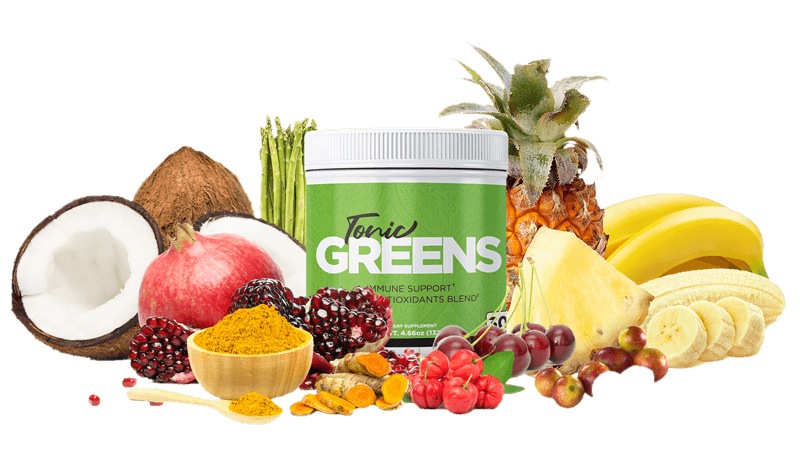
Cover daily immune support, gut balance and steady energy with 57 plant ingredients for as little as $49 a tub, backed by a 60-day money-back guarantee.
GET YOUR UP TO 50% DISCOUNT NOW →